
Explain the DHCP DORA process.
Interview preparation resource from Gate Smashers.
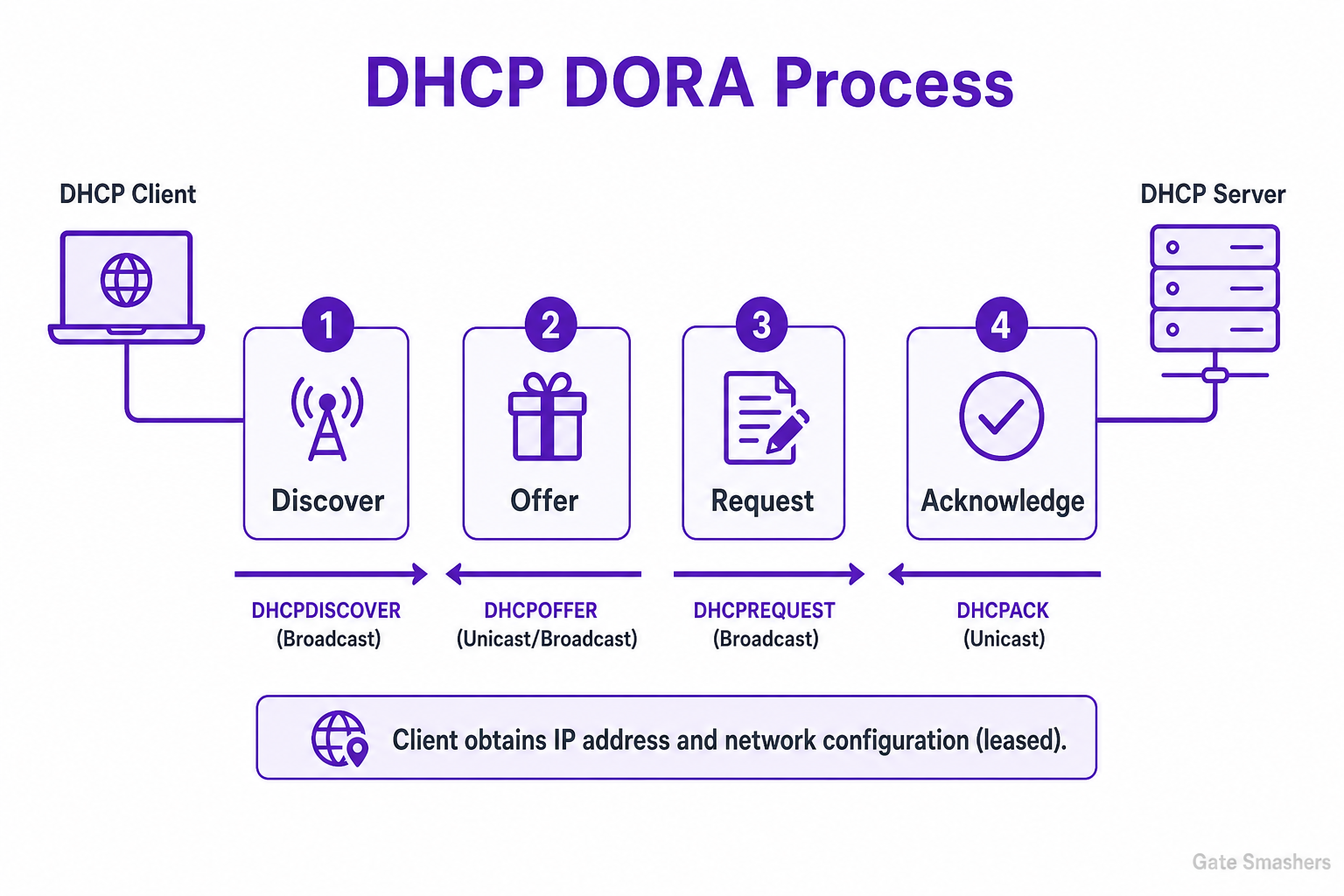
DHCP DORA is the common four-message IPv4 process a client uses to obtain an IP address and related network configuration automatically: Discover, Offer, Request, and Acknowledge.
Purpose
DHCP provides a client with network settings such as an IPv4 address, subnet mask, default gateway, DNS server information, and a lease duration. DORA describes the initial address-allocation exchange between a DHCP client and server.
1. Discover
A client that does not yet know the DHCP server sends a DHCPDISCOVER message to locate available servers. This message is typically broadcast on the local network because the client may not yet have a usable IP address or know the server address.
2. Offer
Each DHCP server able to serve the client may respond with a DHCPOFFER. The offer proposes an IP address and can include configuration options and the lease time for that address.
3. Request
The client sends a DHCPREQUEST to select one offer. During the initial exchange, this request is commonly broadcast, allowing the selected server to identify itself and other servers to withdraw any addresses they offered.
4. Acknowledge and lease
The selected server sends a DHCPACK to confirm the lease and configuration. The client then configures the assigned address and can use the network. The address is leased for a limited period, and the client normally attempts renewal before the lease expires.
DHCP for IPv4 uses UDP: servers listen on port 67 and clients use port 68.